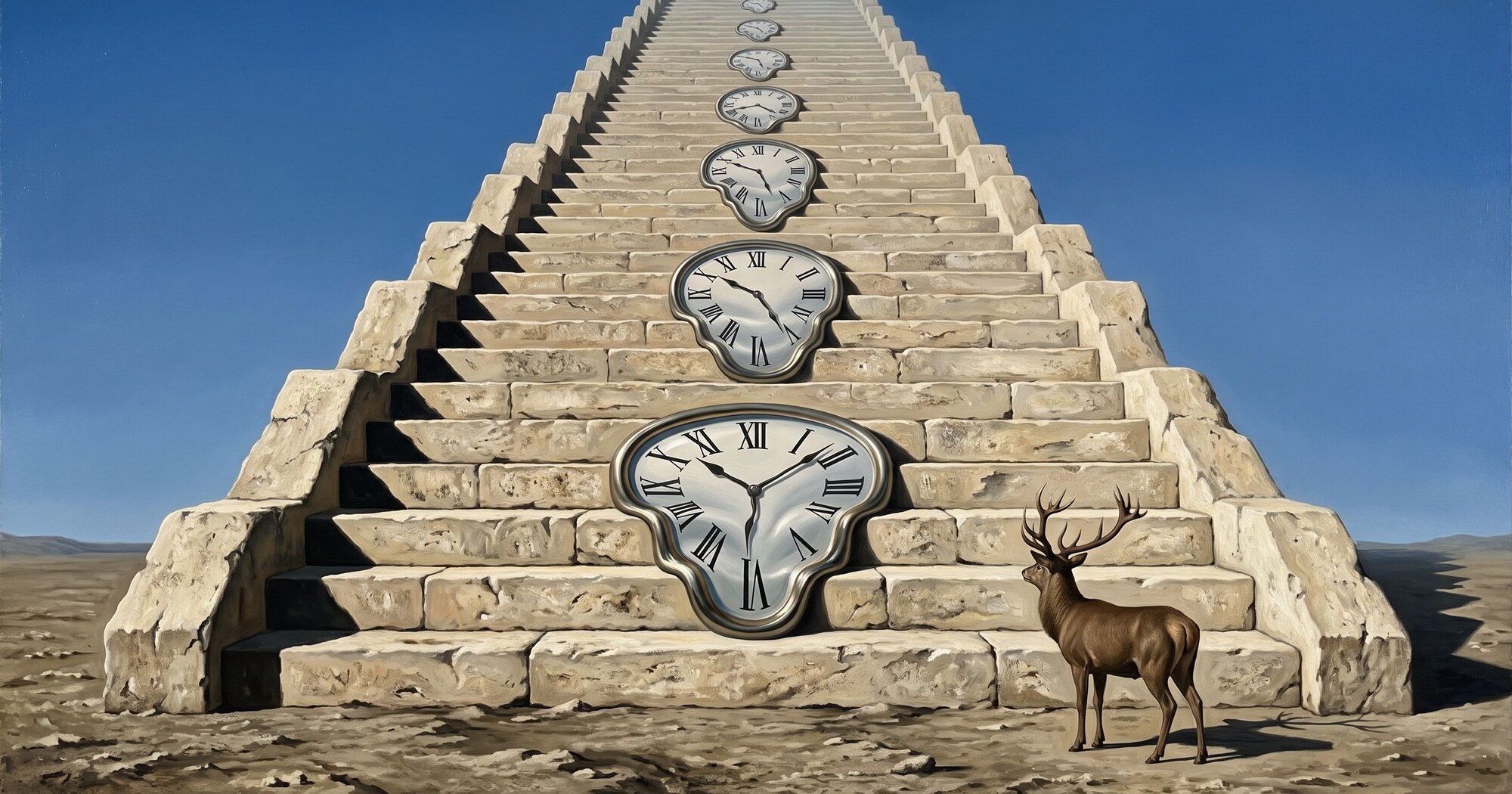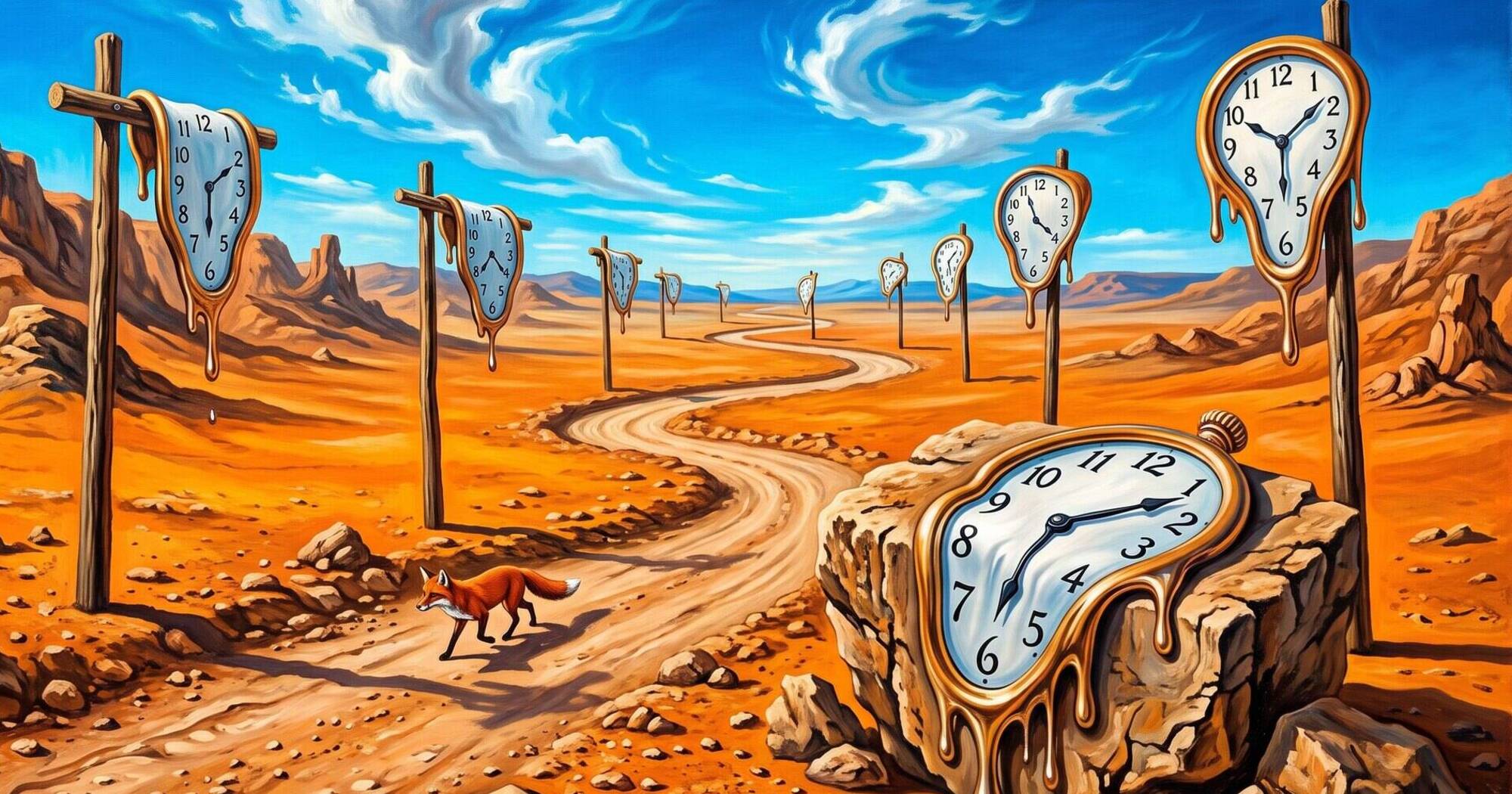

















Why a star day is four minutes shorter than your day
Note the exact time a bright star crosses overhead tonight, and check again tomorrow — it happens about four minutes earlier. Nothing is drifting. The sky simply keeps a different day.
Note the exact time a bright star crosses overhead tonight, and check again tomorrow — it happens about four minutes earlier. Nothing is drifting. The sky simply keeps a different day.
A metronome tells you when to play. A stopwatch tells you what you actually did. Practice needs both halves, and they are not substitutes — the argument is two centuries old.
In July 2014, a man building a sundial in Ghana asked the internet whether the numbers would still be right three weeks later. The answer rearranged the question — a sundial was never telling your watch's time in the first place.
The Gregorian, Julian, Islamic, Hebrew, Chinese, Hindu and Persian calendars all answer the same question — and the question has no exact answer. The year is not a whole number of days, the month fits into nothing, and every calendar is a different bet on which fraction to ignore.
CSV for spreadsheets, JSON for apps, TXT for reading — what actually leaves your phone when you export a TiCaNo session, and the one breaking change in v1.7.0 that a returning spreadsheet must know about.
Since 1972, every leap second has added a second. The next one, if it ever comes, would delete one — 23:59:59 simply never happens. It has never happened in UTC, and the world's timekeepers have now voted to retire the mechanism before finding out.
No link, no server, no cloud — when you share a TiCaNo session, the app hands text or a file to your phone's share sheet and steps out of the way. The second post in our feature series covers what leaves the phone, and exactly what it contains.
Open any server log and every timestamp ends with the same letter. That letter is doing a lot of quiet work, and almost everyone misreads it — UTC is not a time zone at all.
One tap on the eye icon and the screen becomes a timer, controls, and breathing room. The first post in our feature series covers exactly what disappears — and the one thing that deliberately doesn't.
Wall clock over monotonic. A silent notification as the price of staying alive. No analytics in the app you have. Six engineering decisions inside TiCaNo that are settled — and the one we still owe ourselves.
Lap 3 tells you nothing six weeks later. "The hill" tells you everything. How lap naming works in TiCaNo Stopwatch v1.7.0 — where the names travel, how to correct the record, and why the same three taps work for a Saturday morning as well as a set of intervals.
In October 1884, 41 delegates from 25 nations met in Washington to pick one zero for the whole world. The vote was 22 to 1 — and one of the two countries that abstained held out for 27 years.
Your thumb takes about 200 milliseconds. Your phone's screen adds 100 more. A guide to timing things well anyway — what the numbers mean, which errors cancel, and which ones quietly don't.
Cooking, practising, training, timing an experiment, logging a work session — what each one looks like in TiCaNo, feature by feature, boundary by boundary. No countdown promises: the app times up, and that turns out to be the point.
Until 2008, the official style manual of the United States government said 12 a.m. meant noon. It had it backwards, or forwards — and the bodies that have ruled since all agree on one thing: don't write it.
00:04.2137 — that last digit is real, not padding. It is also not an accuracy claim. The difference between resolution, precision and accuracy, told through our own app's code.
In 2018, every mains-powered clock in Europe lost six minutes because the grid drifted by four thousandths of a hertz. No phone noticed. The difference is correction — and the correction is also the one thing that can touch a running stopwatch.
The energy savings round to zero, the heart-attack spike is real but almost always misquoted, and the sleep-medicine consensus recommends the opposite of what the US House just voted for. What the studies actually measured.
In June 1955 the steadiest timekeeper on Earth began ticking — and nothing steady enough to check it against existed. So it was tied to Greenwich, then to the Moon, and finally defined.
In Kashgar, the sun can reach its highest point at ten past three in the afternoon. That is not astronomy — it is politics, and once you see it, the whole map of time makes sense.
Twenty-seven times, a minute has lasted sixty-one seconds. It broke Reddit, grounded check-in desks, and is now being retired — just as the Earth started spinning fast enough to need the opposite.
Start two identical timers at the same instant and come back tomorrow. They disagree — and the reasons are a tuning fork, a parabola, and the temperature of wherever you left them.
It used to have an answer. So did the atom, the jiffy and the shake — units invented centuries before anything could measure them, by people who were counting rather than timing.
Until 1840 every English town kept its own noon, and nobody minded. Then something started moving faster than the sun — and the clocks had to be argued into agreement.
Sixty is a strange number to hang a civilisation's timekeeping on. The answer runs from Sumer to a Kassel workshop to a French decree that made noon five o'clock — and lasted seventeen months.
Your phone would rather your apps stopped running. Here is what actually happens to a stopwatch when the screen goes dark — and the design trade-off behind the answer.
Six officials timed the same Olympic race and got four different answers. The story of how measuring a few seconds stopped being a matter of opinion.
Two numbers, one button press. Understanding which is which turns a list of times into something you can actually learn from.